
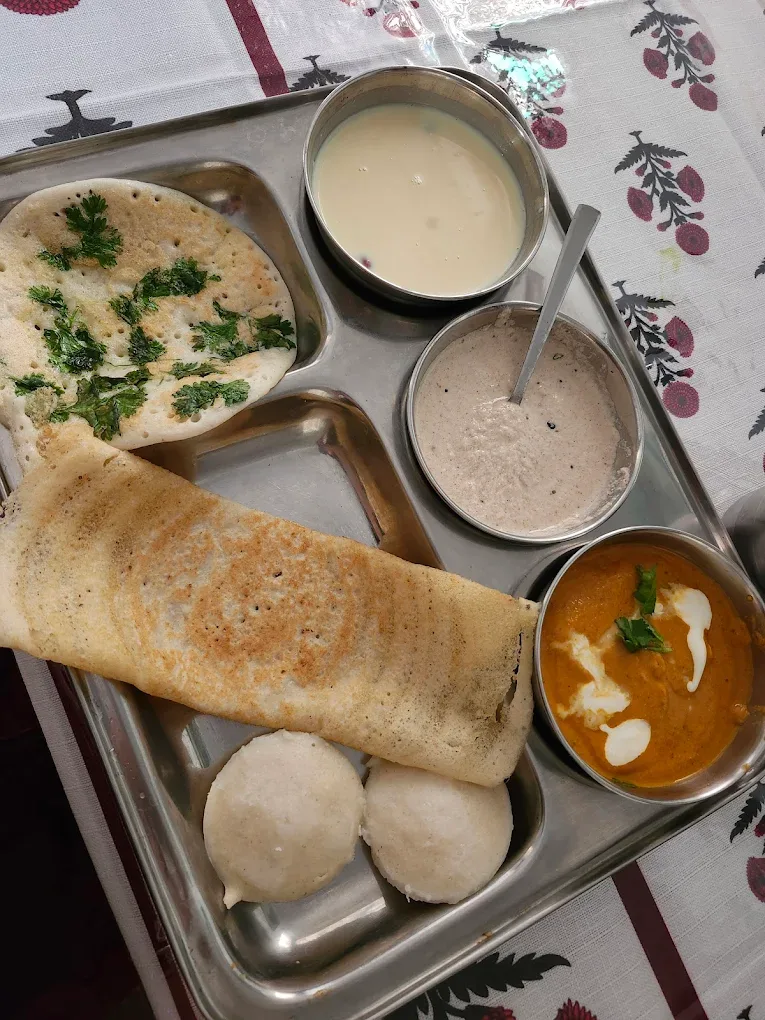
I grew up in a North Indian kitchen. My mother made roti, sabzi, dal. South Indian food was something we ate occasionally at restaurants, and even then it was the simplified version: plain dosa with coconut chutney and a cup of sambar that tasted like thin tomato soup.
I learned to cook South Indian food properly only after I started teaching. Travelers kept asking for dosa. So I learned. Then I got a bit obsessed.
Here is what surprised me most: South Indian breakfast is almost entirely fermented. The batter for dosa and idli uses the same base, and it needs to sit overnight, sometimes longer in cold weather. That fermentation is why idlis are so soft and why dosa has that faint sour note. You cannot rush it. I have tried. The results were flat and disappointing every time.
The batter: where it all begins
Standard dosa and idli batter uses two ingredients: rice (usually parboiled) and urad dal (split black gram). The ratio changes depending on what you are making. For idli, you want more dal. The higher protein content makes it fluffier when steamed. For dosa, more rice gives you a thinner, crispier result.
Soak them separately for 4 to 6 hours, then grind them separately and mix them together. The grinding matters more than most recipes say. If you use a blender and do not grind long enough, the batter will be grainy and the idlis will turn out dense. Traditional cooks use a wet grinder that runs for 20 to 30 minutes. At home, I use a blender and grind in batches. More effort, same result.
After mixing, leave the batter in a warm spot overnight. In Rishikesh in summer, fermentation takes about 8 hours. In winter, closer to 14. The batter is ready when it has nearly doubled in size and smells slightly sour but not off. Trust your nose here. There is a clear difference between “pleasantly tangy” and “this has gone wrong.”
Making dosa
Use a cast iron or non-stick pan on medium-high heat. Pour a ladleful of batter in the center and spread it outward in a spiral with the back of the ladle. This takes practice. Most beginners spread too slowly and the dosa tears. Move with confidence.
A little oil or ghee around the edges. When the top looks set and the edges begin to lift on their own, it is ready. You usually do not flip it.
Plain dosa is exactly what it sounds like. Masala dosa has a spiced potato filling, mashed potato cooked with mustard seeds, curry leaves, and onion, folded inside. Ghee roast dosa stays on the heat longer with more ghee until it turns deep brown and crispy. That last version is harder at home but the texture is worth the extra attention.
Making idli
Idlis are steamed in small molds for about 12 minutes. They are ready when a toothpick comes out clean. Good idli should be soft enough to tear with your fingers and slightly spongy. If it is rubbery, the batter did not ferment enough or the steaming time was too long.
On their own, idlis are mild. They need sambar or a chutney to come alive. This is not a weakness. It is the point. The idli is the vehicle.
Sambar: the one where region matters most
This is where South Indian cooking gets genuinely regional. Tamil Nadu sambar is thinner and more tangy. Karnataka sambar is sweeter, often with jaggery. Kerala sambar uses coconut. The base, toor dal, tamarind, tomato, and sambar masala powder, is similar across regions, but what gets added changes completely.
The masala powder is the complicated part. Every South Indian household has a different recipe. Some families roast and grind their own spices. Pre-packaged sambar powder works, but it tastes uniform in a way that homemade blends do not.
In my class I teach a Tamil Nadu version because it is what I learned first. I add drumstick (moringa pods) when I can find them, and small pearl onions rather than large ones. The difference is noticeable.
What goes wrong and how to fix it
Batter did not ferment enough: flat dense idlis, dosa with no sour flavor. Fix: wait longer, find a warmer spot, or add a small amount of already-fermented batter as a starter.
Dosa stuck to the pan: the pan was not hot enough, or there was too little oil, or the batter was too thick. Add a splash of water to thin it slightly before the next one.
Sambar too sour: too much tamarind. Easy to add, impossible to remove. Start with less than the recipe says and taste as you go.
South Indian breakfast takes longer than most people expect, two days if you are making proper fermented batter from scratch. But once you have batter in the fridge, breakfast takes ten minutes. That ratio is worth it.
If you want to try making dosa and idli in a proper kitchen with guidance, come visit us in Rishikesh. We will make the batter together and you will go home knowing exactly what went right.